
Useful tips
Gasoline generator for home: how to choose in 2026


How to choose a gasoline generator for your home: where to start
When backup power is needed for a private home, most often they choose gasoline generator for home as a practical solution for short and medium-term outages. Such gasoline generator easier to maintain, starts faster in cold weather, and is usually cheaper than diesel counterparts. At the same time, it is important not to buy a model “with a margin of safety”, but first to accurately calculate the load.
When choosing, it is necessary to take into account not only the rated power, but also the type of consumers, starting currents, noise level, fuel consumption and the quality of the output voltage. It is these parameters that determine whether the gasoline generator stably power the boiler, refrigerator, pump, lighting and other equipment without overload.
How to correctly calculate the required power
The first step is to make a list of devices that should work during a power outage. For each device, you need to take the rated power in watts and separately consider the starting loads, especially for equipment with motors: pumps, compressors, refrigerators, washing machines.
The rule of thumb is this: the total power of working devices is multiplied by the safety factor 20–30%, and for inductive consumers, a reserve for starting current is added. If this is not done, the generator may operate unstable or may not start the equipment at all.
- Lighting — usually 100–300 watts for the entire house.
- Refrigerator — 150–300 W in operation, but the start can be several times higher.
- Gas boiler — approximately 80–200 W, depending on the automation.
- Pump — from 500 W and above, with a noticeable starting load.
- Household appliances — a TV, router, laptop, and chargers require little energy, but they should also be taken into account.
If you plan to power only basic consumers, a 2.5–3.5 kW model is often sufficient. That is why the request buy generator 3 kW is one of the most common: it is a compromise between price, mobility and the ability to provide key needs of the house. However, for houses with a pumping station or a large number of appliances, this option may be too small.
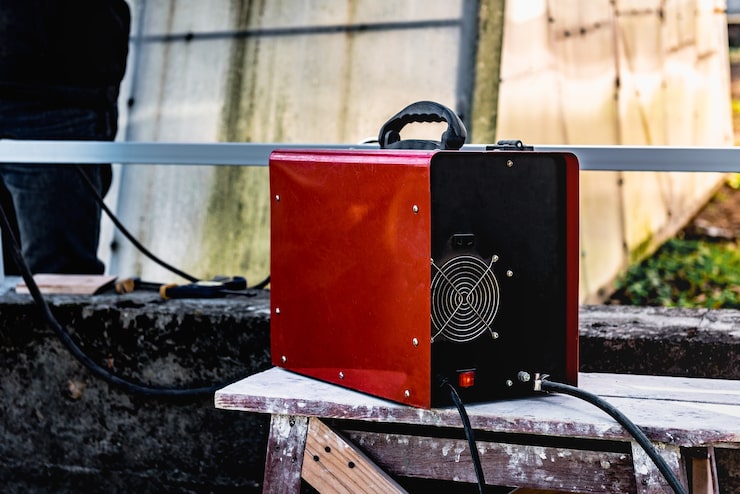
What power to choose: guidelines for a private home
For a small house or cottage, they often take generator with a capacity of 2–3 kW, if you need to provide lighting, a boiler, a router and a refrigerator. For an average private house, 4–6 kW is more often needed, especially if the system includes a pump, gate, tools or additional electrical appliances.
In this category, a lot depends on the usage scenario. If the generator is needed only for emergency shutdowns, you can limit yourself to the minimum sufficient power. If you plan to work regularly for several hours every day, it is better to take a model with a margin so that the engine does not work at the limit of its capabilities.
| Generator power | What can nourish | Advantages | Limitation |
|---|---|---|---|
| 2–3 kW | Lighting, boiler, router, refrigerator, small appliances | Low price, compactness, economical fuel consumption | Limited stock for pumps and powerful appliances |
| 4–5 kW | Basic consumers + pump, part of kitchen appliances | A universal option for most homes | Higher price and higher fuel consumption |
| 6–8 kW | Multiple lines in the house, powerful electrical appliances, tools | Large power reserve, more stable operation | Dimensions, noise, more expensive maintenance |
Fuel consumption: what does it depend on
Gasoline consumption depends not only on power, but also on load, engine type, carburetion quality, and operating mode. In most cases, it is more economical to operate within 50–75% of the nominal than to constantly run the unit at the limit or, conversely, keep it almost without load.
For a private home, this is especially important if the generator is needed for several hours in a row. Incorrect selection can lead to the fact that the equipment will work properly, but fuel consumption will be excessive. Therefore, before buying, it is worth comparing not only the power, but also the real efficiency of the model.
- The higher the power, the more fuel the engine usually consumes.
- Inverter models often more economical at partial load.
- Overload dramatically increases consumption and reduces service life.
- Quality gasoline and regular maintenance help maintain stable operation.
If quiet operation and fuel economy are important, it is worth considering the inverter format. It is often paid attention to by those who are interested in the price of an inverter generator in relation to the comfort of operation, especially now, when new electricity tariff 4.32 UAH forces homeowners to look for alternative energy sources. Such models are usually more expensive, but are well suited for sensitive electronics: boilers, laptops, security systems, telecommunications equipment.
Inverter or regular gasoline generator: which is better for the home?
Usual gasoline generator suitable for most household applications, if the load is not too demanding on voltage quality. Its advantage is its affordable price and simpler design. For lighting, heaters, pumps and most household appliances, it is a practical option.
An inverter generator is worth choosing if you have a lot of electronics in your home or if a stable voltage is important. It is more compact, quieter and more economical at partial load, but it is more expensive. In the household solutions segment, it is often compared petrol generator in classic design and inverter versions according to these criteria.
Special attention is drawn to Honda gasoline generator, as the brand is often considered an option for private homes, cottages, and workshops. The advantage of such models is that they offer different capacities and case formats - from compact portable ones to more productive backup power solutions.
What else to pay attention to before buying
In addition to power, fuel consumption and type of output voltage, there are several other parameters that directly affect ease of use. If they are ignored, even a high-quality gasoline generator may be inconvenient in daily use.
- Noise level — for a private house, it is better to choose a model with a noise-proof casing or a low acoustic performance.
- Fuel tank capacity — determines how long the generator will run without refueling.
- Voltage stabilization system — especially important for sensitive electronics.
- Availability of overload protection — increases the safety of equipment.
- Launching — manual, electric start or combined option affects comfort.
Also check for service availability, spare parts availability, and manufacturer recommendations for maintenance. A cheaper device without regular service may be more expensive in the long run than a higher-quality model with predictable support.
Rules for the first start of a gasoline generator
The first start determines how the engine will perform in the future and how quickly it will reach stable operation. Before starting, carefully read the instructions for your model, as different manufacturers may have their own preparation requirements.
Before starting the unit, make sure it is on a level surface, in a well-ventilated area and away from sources of ignition. Starting indoors or in a closed garage is extremely dangerous due to exhaust fumes.
- Check the oil level and add oil to the recommended level if necessary.
- Fill the tank with high-quality gasoline that meets the manufacturer's requirements.
- Inspect the filter, spark plug, and external connections.
- Turn off all consumers before starting.
- Start the generator and let it run without load for a few minutes.
- Connect devices gradually, starting with the least sensitive ones.
The first 20–30 hours of operation are often considered a break-in period. During this time, it is advisable not to load the engine to its maximum and to regularly check the oil level. This helps the parts to wear in and extends the life of the unit.
What is important to check after launch
After turning on, pay attention to the sound of the engine, the presence of extraneous vibrations and voltage stability. If the generator runs unevenly or “floats” in speed, this is a signal to check the settings, fuel and load.
You shouldn't connect all the equipment in your house at once. It's better to start the system gradually to understand whether you're exceeding the permissible power. It is this caution that allows you to avoid mistakes that even a new gasoline a home generator breaks down quickly.
Common mistakes when choosing
The most common mistake is focusing only on price without taking into account the real needs of the house. Another typical problem is underestimating starting currents, which is why the generator cannot cope with the equipment, although according to the passport it seems to have sufficient power.
- Buying a model that is too weak without power reserve.
- Ignoring voltage quality for sensitive electronics.
- Insufficient attention to fuel consumption and battery life.
- Whole house connection without priorities, instead of highlighting critical lines.
If you choose with an understanding of the load, operating mode and features of the house, the generator will become a reliable source of backup power. For some, a compact 3 kW option will be optimal, for others - a more powerful installation with a reserve for a pump and kitchen appliances. The main thing is to choose a model for real needs, and not just for marketing characteristics.
Frequently Asked Questions (FAQ)
Will it be enough? 3 kW generator for a private house?
Yes, if you need to power the lights, router, gas boiler, and refrigerator. But for a pump, power tool, or several powerful devices at the same time, this may not be enough.
What is better for sensitive equipment: a conventional or inverter generator?
For electronics, boilers, and devices that require stable voltage, it is better to choose an inverter option. It provides better quality power and usually operates more quietly.
When can I connect the equipment after the first start-up?
After 3–5 minutes of no-load operation, when the engine reaches a stable mode, connect the devices gradually, not all at once.