
Useful tips
Cleaning solar panels from snow and dust

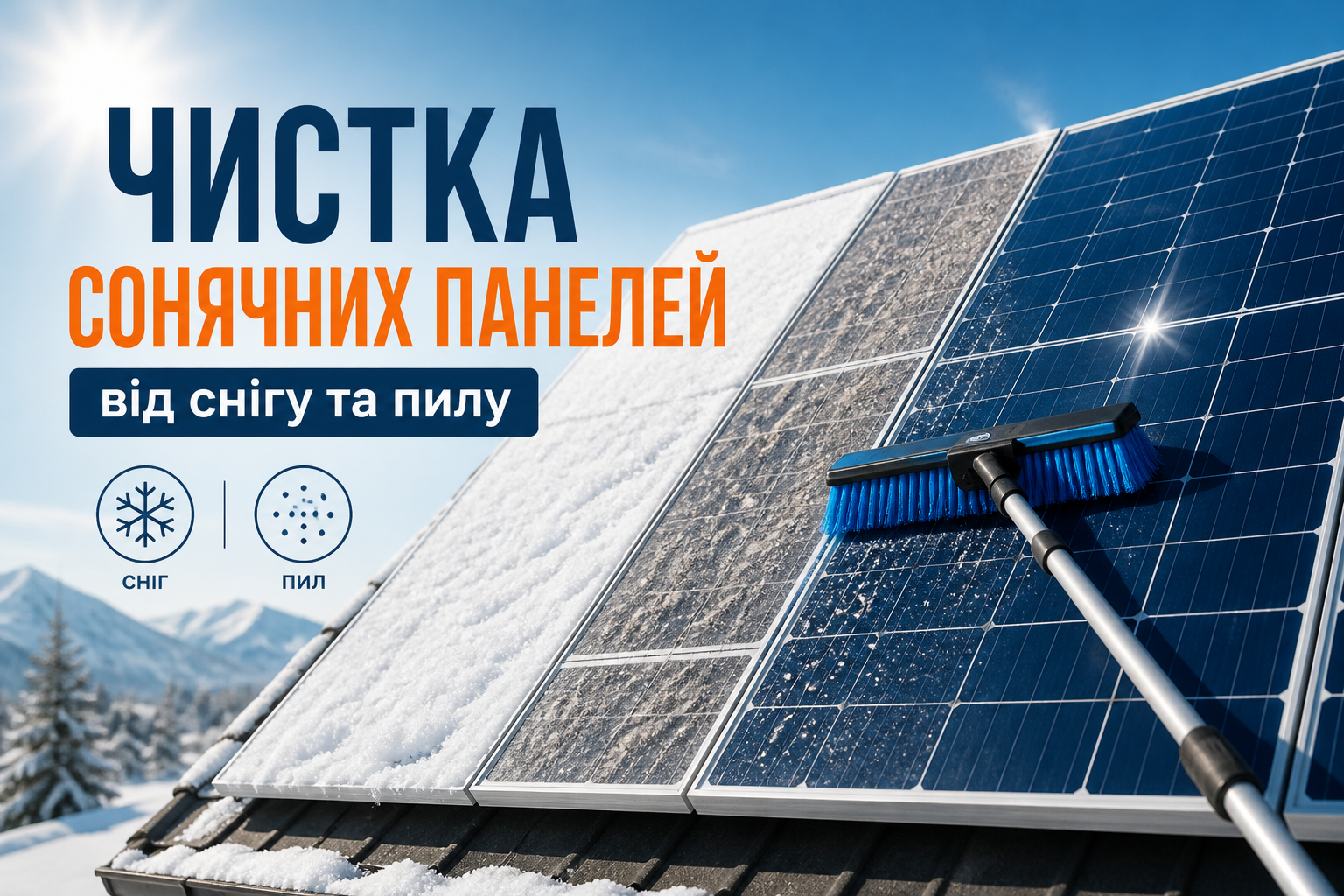
Solar panel cleaning from dust, snow, leaves and bird droppings helps maintain the predicted electricity generation. Pollution reduces the amount of light reaching the photovoltaic cells, and uneven shading can cause local overheating of the modules. At the same time, excessively frequent or improper cleaning can damage the glass, seals or protective coating.
When do solar panels need cleaning?
In most regions, rain will partially wash away ordinary dust, but it will not remove grease, dried droppings, and dirt near the bottom frame. The frequency of maintenance depends on the angle of the modules, the amount of precipitation, and the proximity of roads, fields, industrial facilities, and trees.
A practical guideline is to compare actual generation with performance under similar sunny weather conditions. If performance has consistently decreased by 5–10% without technical malfunctions, it is worth inspecting the surface. Cleaning is also required after dust storms, prolonged dry periods, or the appearance of local stains.
| Type of pollution | Possible impact | Recommended action |
|---|---|---|
| A thin layer of dust | Approximately 2–5% losses | Check after rain, wash as needed |
| Dust with droppings or leaves | 5–15% and local shading | Cleaning at the earliest safe time |
| Solid snow cover | Generation may stop | Assess the feasibility and risk of cleaning |
| Sleet | Significant light blocking | Don't cut, wait for the thaw |
The losses given are approximate: the result depends on the layer thickness, string configuration, bypass diode operation, and solar radiation level.
Safely cleaning solar panels from dust
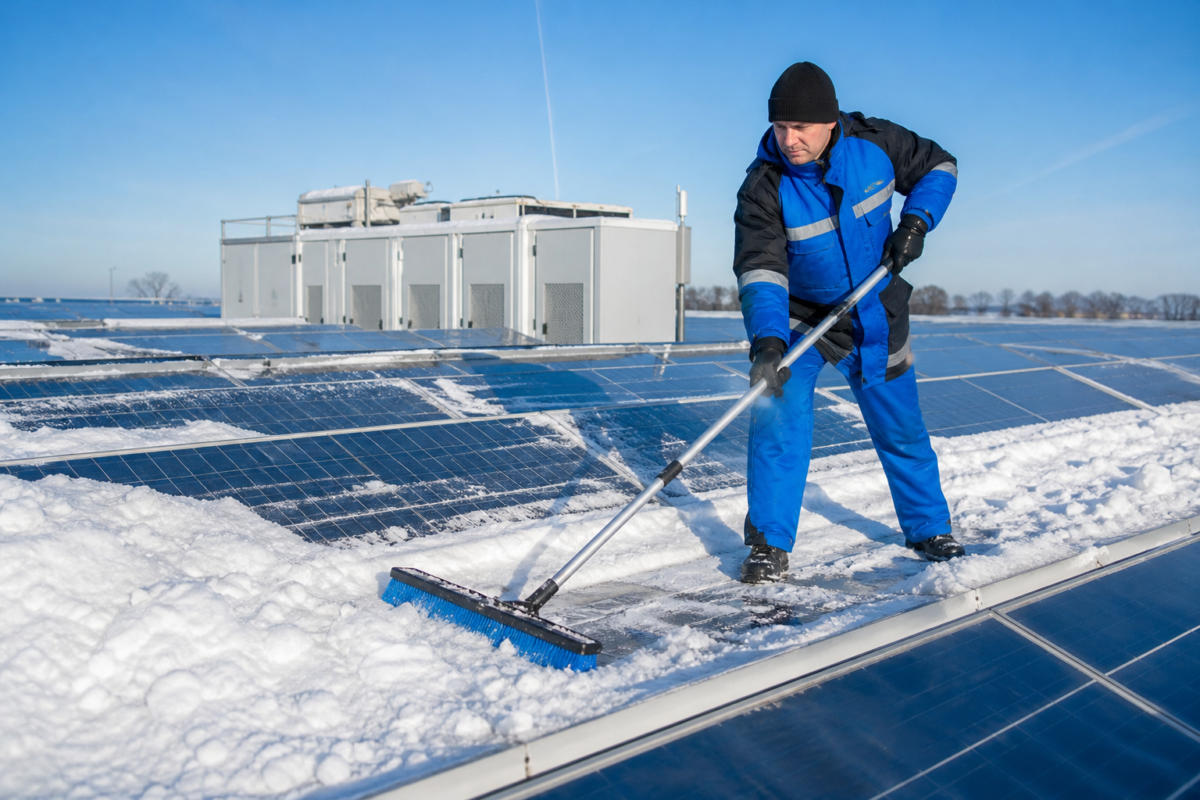
It is better to perform the work in the morning or evening, when the modules are cool. Cold water on hot glass creates a temperature difference, which increases the risk of microcracks. Before servicing the ground system, proceed in accordance with the manufacturer's instructions and electrical safety requirements. Rooftop installations should be serviced from a safe position or entrusted to specialists with safety equipment.
For cleaning, use a soft brush, a non-abrasive sponge or a telescopic rod with a water supply. Demineralized water is best: after drying, it does not leave mineral stains. If plain water is not enough, a neutral agent recommended by the module manufacturer is acceptable.
- do not use metal scrapers, hard brushes and abrasive powders;
- do not stand or lean on the panel;
- Do not direct the high-pressure jet at the frames, connectors and back side;
- do not use solvents, concentrated acids or alkalis;
- Do not pull the cables under the modules with a tool.
How to remove snow without damaging the modules
A thin layer of snow on panels with a sufficient slope often comes off on its own after the sun comes out. The dark surface heats up, and the meltwater forms a slippery layer. Therefore, mechanical cleaning is not always justified: a few winter kilowatt hours may not compensate for the risk of falling or damaging the equipment.
If access is safe, remove loose snow with a soft brush or a special scraper with a rubber or foam edge. The movements should be light, in the direction of the slope. It is not necessary to clean the glass until it is dry - it is enough to expose part of the surface, after which the sun will accelerate the melting.
Frozen snow and ice should not be kicked off, weighed down with metal objects, or poured over with hot water. This can cause scratches, damage to the glass, and depressurization of the frame. It is safer to wait for natural warming.
Post-cleaning control
After drying, the modules should be inspected for cracks, gaps, frame displacement, and damaged cables without touching the electrical connections. The generation is compared to typical values under similar weather conditions. If cleaning does not restore performance, the cause may be shading, inverter failure, module degradation, or string problems.
Practical advice: Take photos of the panels and record generation figures before and after maintenance. This log will help you determine the actual cleaning frequency for your installation, rather than cleaning the modules according to a formal schedule.