
Useful tips
Proper battery storage: UPS preservation for months


Proper storage of a UPS battery for months is not just about “disconnecting the battery and putting it in the closet.” In real life, it is during downtime that batteries most often lose capacity, become sulfated, become unbalanced, or degrade due to temperature and incorrect charge levels. If you want your backup power to remain reliable after a long pause, you need to understand how a battery behaves at rest, what battery self-discharge, why gel battery preservation has its own nuances and what makes it different lithium lifepo4 battery storage from classic lead-acid solutions.
Why does the battery deteriorate during idle time?
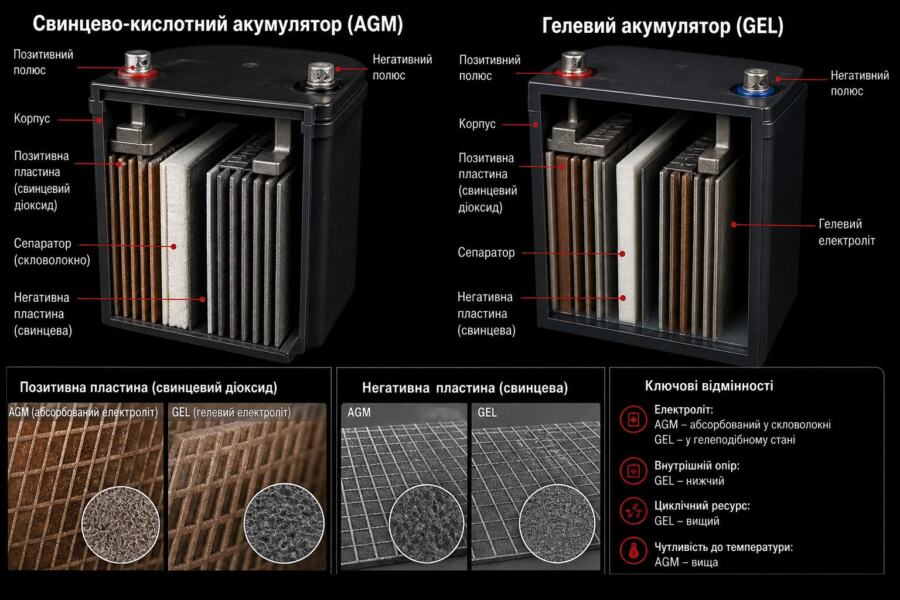
A battery ages not only under load. Even without work, chemical processes occur inside it:
– in lead-acid batteries, lead sulfate crystals grow slowly;
– in lithium batteries, the electrolyte degrades and internal resistance increases;
– any battery loses charge due to battery self-discharge;
– elevated temperature accelerates all these processes.
For UPS, the situation is especially dangerous when the battery is not just in storage, but is connected to the system itself. Some UPS models consume a small current even when turned off, which means hidden discharge. If the system simply stands without control for a month or two, the battery can drop below a safe level.
What state of charge is required for storage?
The most common mistake is to leave the battery either fully charged or almost discharged “so that it doesn’t get hot.” In reality, you need the right compromise.
For lead-acid, AGM and gel batteries
For gel battery preservation it is optimal to keep it in a state of about 100% charge, but without prolonged exposure to high voltage. If the battery is disconnected from the UPS and is lying without load, self-discharge will be slow, but it does occur. Therefore, monitoring is required every few weeks.
For LiFePO4
For lithium lifepo4 battery storage it is better to keep the battery not at maximum, but at a level of approximately 40–60% SOC. This reduces cell aging. A full charge for extended periods of inactivity is not necessary and is even undesirable if the battery will be lying around for months. But it is critical that it does not go into deep discharge.
Comparing storage modes
| Battery type | Recommended storage charge level | Operating temperature for idle time | What is most dangerous | Check |
|—|—:|—:|—|—|
| Gel / AGM | 100% before shutdown | +10…+20°C | Deep discharge, sulfation | Once a 3–4 weeks |
| LiFePO4 | 40–60% | +10…+25°C | Overdischarge, storage on 100% long | Once a 1–2 months |
| Lead-acid outdoor | 100% | +5…+20°C | Self-discharge, evaporation, corrosion | Once per 2–4 weeks |
This table is a practical guide. The actual values depend on the specific manufacturer, but the logic is always the same: avoid deep discharge, do not keep the battery in the heat, and do not forget about periodic monitoring.
Gel battery conservation: what to really do
A gel battery loves stability. It does not tolerate overcharging or deep discharge, and during storage it is often damaged due to elementary negligence.
Step by step
1. Fully charge the battery. a standard charger or UPS with the correct algorithm.
2. After charging is complete, give it let stand for 2–4 hours.
3. Disconnect the terminals from the UPS to eliminate parasitic consumption.
4. Store the battery in a dry place with a temperature +10…+20°C.
5. Once a 3–4 weeks check the voltage.
6. If the voltage has dropped noticeably, recharge.
What to look for during an inspection
For a 12-volt lead-acid battery at rest, approximately:
– 12.7–12.8 V — the battery is well charged;
– 12.4–12.5 V — there is already a noticeable discharge;
– below 12.2 V — it's time to charge without delay;
– below 12.0 V — this is already a dangerous zone for long-term storage.
Importantly: Do not store a gel battery in a discharged state. For it, sulfation is not a theory, but the most common cause of capacity loss after a “dead season”.
LiFePO4 lithium battery storage: main differences
Lithium iron phosphate batteries behave differently. They have lower self-discharge, better cyclic stability, but there are also rules.
What to consider
– Do not leave LiFePO4 on for a long time. 100% charge, if it is not used.
– Do not store the battery completely discharged.
– If there is a built-in BMS board, make sure that its own consumption will not drain the battery in a few months.
– Do not charge LiFePO4 at low temperatures unless prohibited by the manufacturer.
Practical mode
For downtime for a month:
– charge to 40–60%;
– turn off the load;
– isolate from the UPS or any background consumption;
– store at +10…+25°C;
– check the status once in a while 1–2 months.
If the battery is stored in a warehouse in winter at low temperatures, self-discharge will be lower, but there is another danger - condensation and subsequent corrosion of the contacts. Therefore, dryness and the absence of sudden temperature changes are required.
Temperature: Invisible Enemy #1
Temperature is a key factor for any battery. I have seen a good battery “die” after sitting idle in a stuffy technical room more than once.
What happens when overheating
– chemical reactions are accelerated;
– battery self-discharge grows;
– for lead batteries, plate corrosion increases;
– for lithium batteries, the aging of the cells is accelerated.
What to avoid
– direct sun;
– boiler rooms where the temperature jumps;
– unheated damp basement;
– balcony without protection against condensation;
– storage near heating radiators or heating inverters.
Ideally, a dry room with a stable temperature, without sudden fluctuations.
How to properly disconnect a UPS before preservation
Many problems arise not from the battery itself, but from improperly “maintaining” it. If a UPS is left plugged in but not under load, it can still slowly and imperceptibly drain the battery.
Safe procedure
1. Turn off the load.
2. Disconnect the UPS from the mains.
3. Make sure the charging mode is complete.
4. Remove the battery terminals.
5. Check for sparks, heat, or damaged insulation.
6. Mark the shutdown date.
What else is important?
– do not leave exposed terminals;
– do not allow a short circuit;
– do not place metal objects nearby;
– for a large battery assembly, use separate fuses or disconnectors.
Danger: Even 12 V can give a very large current in the event of a short circuit. This is not a “small battery”, but a source of a powerful accident.
What to check during long-term storage
For normal proper storage a simple regulation is enough.
For gel and AGM
– resting voltage;
– no swelling of the body;
– cleanliness of terminals;
– absence of corrosion;
– storage temperature.
For LiFePO4
– voltage at the terminals;
– BMS status;
– whether there is any skew in the cells in the composition;
– did one module self-discharge faster than the others?;
– whether charging is allowed in the current temperature conditions.
Practical checklist
– Measure the voltage with a multimeter.
– Inspect the hull.
– Check the storage location for humidity.
– Assess whether there is any extraneous consumption.
– Recharge the battery if necessary.
Common mistakes I see most often
– they leave the battery in the UPS for the whole winter without monitoring;
– put the battery in a discharged state;
– the conditions are confusing gel battery preservation and LiFePO4;
– stored in a warm room near the boiler;
– ignore battery self-discharge;
– they charge the lithium battery “with whatever they can find”, without a normal controller;
– they do not record the date of the last inspection.
The result is one: in the spring the battery is physically there, but the reserve is gone.
Practical advice from an engineer
If you need the battery not tomorrow, but in a few months, just do this:
– for gel and AGM – charged to 100%, disconnected, placed in a dry, cool place;
– for LiFePO4 — left 40–60%, disconnected everything unnecessary, checked the BMS;
– do not allow deep discharge;
– do not leave the battery in a hot room;
– open the manufacturer's passport every few weeks, as some models have their own storage requirements.
Conclusion
Proper battery storage — it is not a complex science, but a discipline. For a UPS, three things are most important: the correct charge level, normal temperature and complete disconnection from hidden consumption. For gel batteries, it is critical to prevent sulfation, for LiFePO4 — do not keep them for a long time at 100% and do not bring them to a deep discharge. If you follow these simple rules, the battery will live much longer and after conservation will not fail at the moment when backup power is really needed.
Advice from Engineer Gennady: do not trust the battery “to itself” for months without supervision. One quick check every few weeks saves money, nerves, and preserves real energy independence, not its illusion.
Frequently Asked Questions (FAQ)
Can I leave a gel battery in a UPS for 2–3 months unattended?
This is only possible if you are sure that the UPS does not consume excess current and the battery is fully charged. 100%. But it's better to unplug it and check it at least once a month.
What charge level is best for LiFePO4 during storage?
Optimal 40–60%. This reduces element aging and is the best option for long downtimes.
Is it harmful to store a battery in the cold?
Moderate cold can even reduce self-discharge, but dryness and the absence of condensation are important. Charging LiFePO4 in the cold is only possible if expressly permitted by the manufacturer.
How often should a battery be checked in storage?
For lead-acid batteries - once a 3–4 weeks, for LiFePO4 - once a 1–2 months. If the room is warm or there is doubt about self-discharge, check more often.