Useful tips
Inverter cooling: rules for protection against overheating

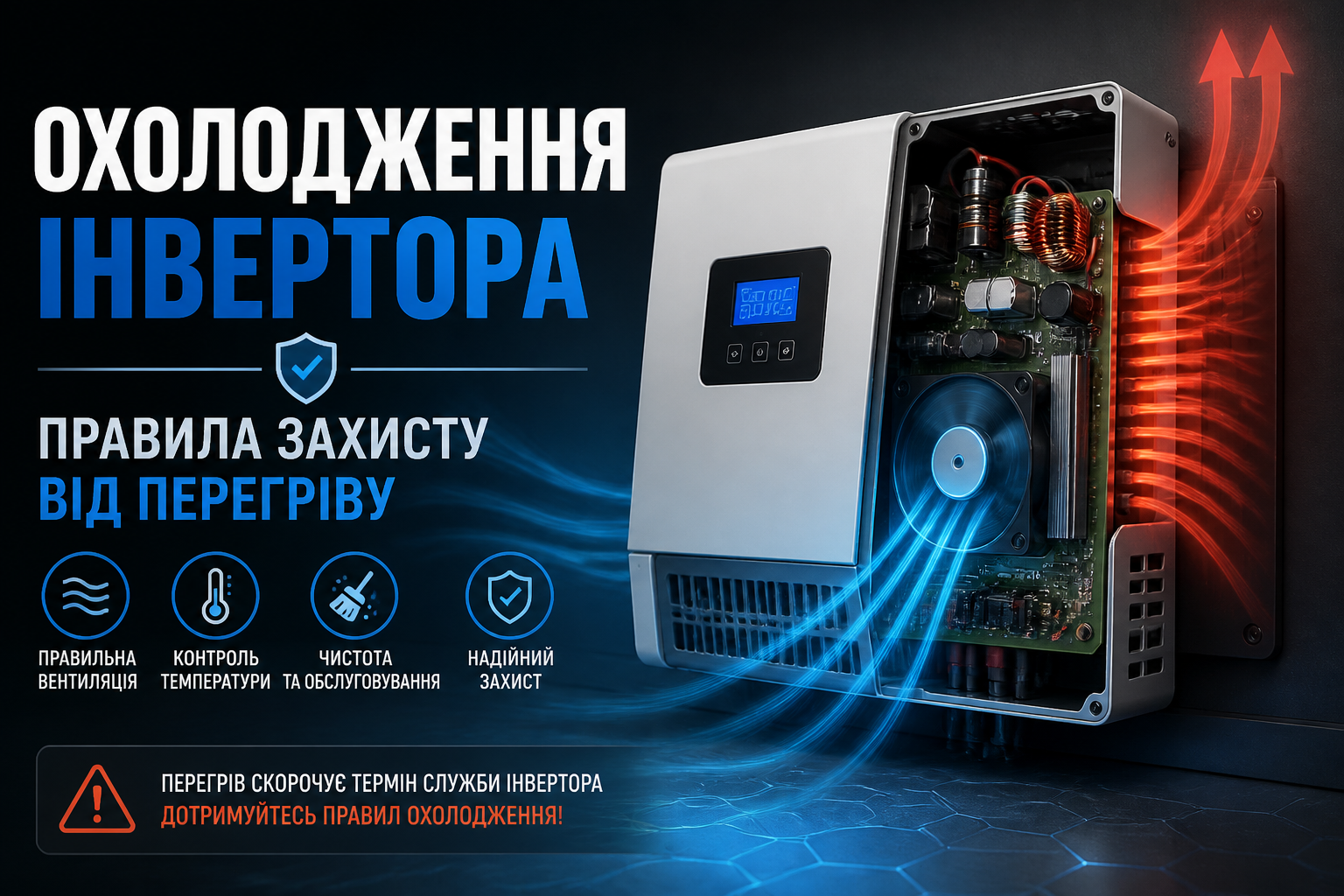
Inverter cooling directly affects its resource, voltage stability and the safety of the entire power system. During the conversion of direct current to alternating current, power transistors, transformers and chokes generate heat. If it is not removed quickly enough, the device reduces power, shuts down or is damaged.
Why Inverter Cooling is Critical
Even a high-quality converter has energy losses. With an efficiency of 95%, an inverter delivering 3 kW to a load dissipates approximately 158 W of heat. In a closed cabinet, this is enough to quickly increase the air temperature and overheat electronic components.
| Output power | Efficiency | Approximate heat output |
|---|---|---|
| 1 kW | 95% | 53 W |
| 3 kW | 95% | 158 W |
| 5 kW | 95% | 263 W |
The calculation is performed using the formula: Pwarm =Pex × (1 / η − 1), where η is the efficiency in fractions of one. Actual values depend on the model, load, battery voltage, and operating mode.
How to organize inverter cooling
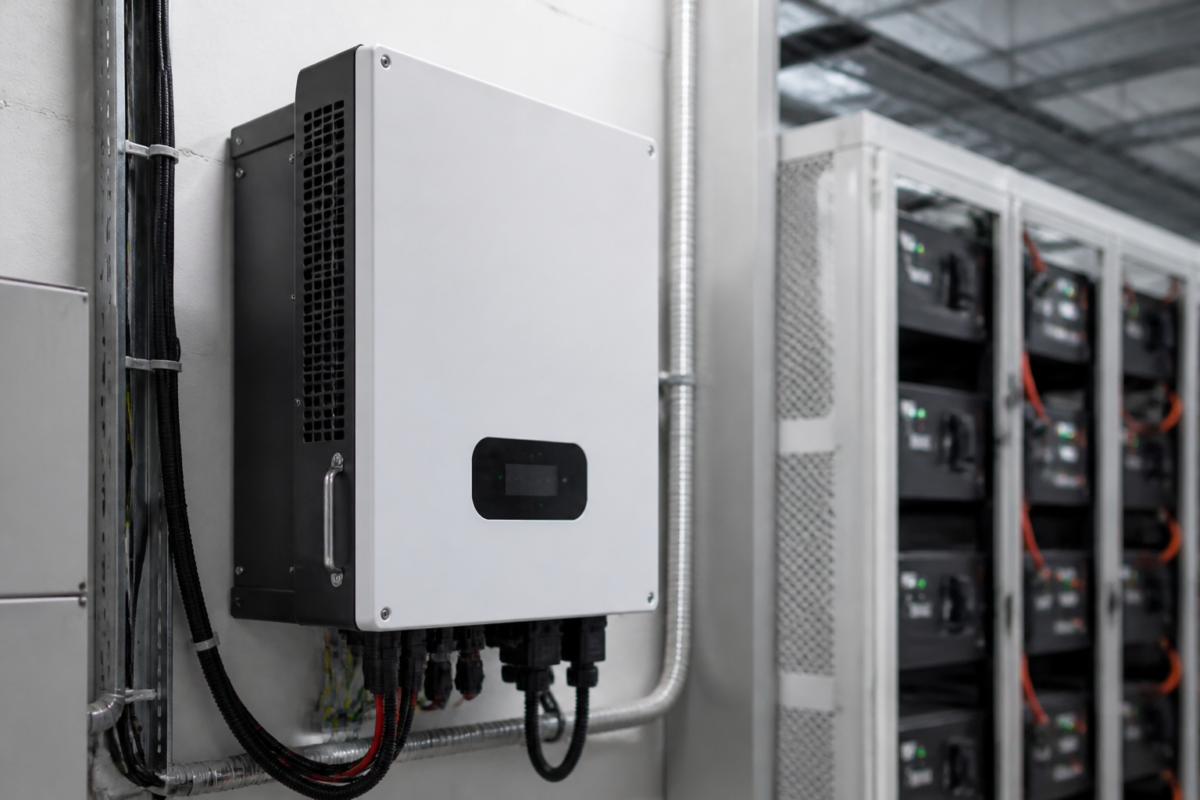
The inverter should be mounted vertically or in the position specified by the manufacturer. This ensures proper air movement through the ventilation holes and radiators. Leave free space around the case: usually at least 10–20 cm on the sides and 20–30 cm near the air intake and outlet areas. The exact distances should be checked in the instructions.
A dry, clean and ventilated room is suitable for installation. Do not place the equipment near heating devices, in direct sunlight, in a sealed cabinet or above batteries, especially lead-acid ones. Electrolyte vapors and corrosive gases are harmful to contacts and fans.
- Passive cooling uses radiators and natural convection; it is quiet but requires free air movement.
- Active cooling operates using built-in fans that cannot be blocked by panels, cables, or filters with excessive resistance.
- Forced ventilation of the cabinet required if the inverter operates for a long time with a high load or together with other fuel-generating equipment.
Signs of overheating and common errors
Insufficient heat dissipation is indicated by frequent emergency shutdowns, temperature errors, a drop in output power, continuous fan operation, the smell of heated insulation, or an excessively hot case. Some models automatically limit the current before reaching a critical temperature, so a decrease in performance should also not be ignored.
A common mistake is choosing an inverter without a power reserve. Constant operation at the limit of the nominal creates maximum thermal load. For long-term operation, it is advisable to leave a reserve of about 20–30%, taking into account the starting currents of compressors, pumps and electric motors.
Dust on radiators reduces heat transfer, and dirty fan blades reduce airflow. Cleaning should only be done after the device has been completely de-energized. Use compressed air carefully, holding the impeller in place to prevent the fan from spinning at a dangerously high speed.
Temperature control and prevention
It is advisable to maintain the room temperature within the limits specified in the equipment passport; for many household models, the optimum is approximately 10–30 °C. At higher temperatures, the permissible power may decrease. If the inverter is installed in a cabinet, it is useful to monitor the temperature at the air inlet, and not just in the room.
Every few months, check the ventilation holes, fan noise and rotation, power terminal tightness, and cable condition. A practical guideline: if the inverter continues to frequently trip after cleaning, reduce the load and check the ventilation before the next long operation cycle.